About the authors
-
 Laura Macías
Global Lead for RISE Women's Advancement, RISE
Laura Macías
Global Lead for RISE Women's Advancement, RISE
Share this article


Macy’s is working with WWF and RISE to address heat stress, basin health, clean water access, and worker health and safety in textile factories.
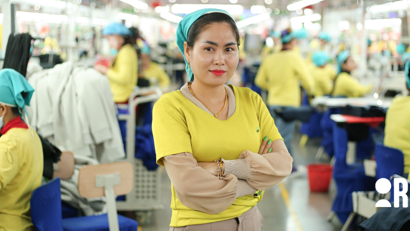
Inside the world of apparel and textile factories, workers face an invisible threat that grows more dangerous each year. With global temperatures continuing to climb and extreme heat becoming more frequent, the already hot environment inside factories can reach dangerous levels. Workers are exposed to added heat from machines, minimal ventilation, and steady production demands that further exacerbate worsening conditions.
Heat stress, a condition that occurs when the body cannot cool itself sufficiently, leading to exhaustion, illness, and in severe cases, organ failure, is becoming an urgent occupational health crisis that demands immediate attention.
"Extreme heat causes dehydration and fainting, putting workers' health at serious risk. It also reduces productivity and time on the job, resulting in immediate income loss for workers who are already struggling financially,” said Christine Svarer, Executive Director of RISE (Reimagining Industry to Support Equality), a global collaboration of workers, industry and policy makers dedicated to accelerating equality and opportunity for low-income workers in garment, footwear and home textile supply chains.
Addressing that risk starts with something fundamental: water. Water sits at the center of the solution. Clean, reliable water is the most important tool for protecting the body from heat. Yet, access to it doesn’t begin at the factory. It starts at the source, in watersheds that supply communities and the people who live and work in them. Unfortunately, these sources are under growing pressure too.
Macy’s, Inc. partnered together with WWF and RISE to address the interconnected challenges of water management and worker well-being in supply chains. WWF brought deep expertise on freshwater systems, climate resilience, and water stewardship issues, with a particular focus on how water scarcity, pollution, and ecosystem degradation affect the communities and industries that depend on them; RISE contributed research on how climate change is affecting workers in Cambodia and Bangladesh. This resulted in practical guidance for Macy’s, Inc. suppliers who operate in high-risk regions, so they can manage water more responsibly while supporting worker health and safety.
- Cambodia
- Bangladesh