News Hero Image

News

Sustaining Progress: Our 2025 Annual Report

Sustaining Progress: Our 2025 Annual Report

December 10, 2025
Christine Svarer Image Christine Svarer

Together, we made important strides in 2025. Three years in, RISE has supported over one million workers through our workplace programs.

RISE at Financial inclusion Week

September 24, 2025
Ella Moffat Image Ella Moffat
RISE at Financial inclusion Week

Watch RISE's sessions on how wage digitalization accelerates financial inclusion in global supply chains and boosts garment workers' financial health & security.

Weaving Fairness: How Women Workers Hold the Key to Climate Resilience in the Garment, Footwear, and Textile Sectors

August 27, 2025
Laura Macías Image Laura Macías
Weaving Fairness: How Women Workers Hold the Key to Climate Resilience in the Garment, Footwear, and Textile Sectors

Climate change is already hitting the garment, footwear, and textiles sectors hard. Its impacts are rapidly compounding for both workers and businesses in countries like Bangladesh and Cambodia. 

45% and rising: A decade of wage digitalization globally

July 31, 2025
Christine Svarer Image Christine Svarer
Ella Moffat Image Ella Moffat
45% and rising: A decade of wage digitalization globally

How RISE helped drive the global transformation from cash to digital wage payments revealed by the Global Findex 2025, contributing to increased financial inclusion worldwide.
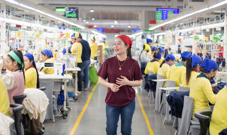
#WhenWomenRISE: Digital wages are a win for workers and business in Cambodia

March 6, 2025
#WhenWomenRISE: Digital wages are a win for workers and business in Cambodia

For millions of workers in the garment industry, including women, receiving their wages digitally instead of in cash is a gateway to financial security and independence.

Collaborative Action toward Gender Equality in Supply Chains: our 2024 Annual report

December 12, 2024
Christine Svarer Image Christine Svarer
Collaborative Action toward Gender Equality in Supply Chains: our 2024 Annual report

2024 Annual report: Collaborative Action toward Gender Equality in Supply Chains

Advancing Financial Inclusion and Resilience in Global Supply Chains: A Practical Guide for Financial Service Providers

October 14, 2024
Ella Moffat Image Ella Moffat
Charlotte Pallangyo Image Charlotte Pallangyo
Kamrul Hossain Shuvo Image Kamrul Hossain Shuvo
Sethypong Sok Image Sethypong Sok
Christine Svarer Image Christine Svarer
Advancing Financial Inclusion and Resilience in Global Supply Chains: A Practical Guide for Financial Service Providers

In this guide for financial service providers developed by RISE and Mastercard, we share insights and recommendations to acquire new customers at scale through responsible wage digitalization; drive account usage of a range of financial products and services; and expand product offering to build financial security.

Financial Empowerment in Cambodia: Unveiling the Benefits of Responsible Wage Digitalization in the Garment Industry

August 7, 2024
Sethypong Sok Image Sethypong Sok
Charlotte Pallangyo Image Charlotte Pallangyo
     Financial Empowerment in Cambodia: Unveiling the Benefits of Responsible Wage Digitalization in the Garment Industry

Wage digitalization: a path to accelerating financial health for garment workers

July 16, 2024
Christine Svarer Image Christine Svarer
Payal Dalal Image Payal Dalal
Wage digitalization: a path to accelerating financial health for garment workers

Discover how responsible wage digitalization and financial capability training are empowering women garment workers by improving their financial health and economic agency. This approach not only enhances business efficiency but also contributes to broader economic stability and growth in global supply chains.

RISE: A Reflection on Women’s Advancement Beyond Supervisory Roles in the Garment Industry

March 12, 2024
4 mins
Laura Macías Image Laura Macías
Sreya Nath Image Sreya Nath
Sharmishtha Nanda Image Sharmishtha Nanda
RISE: A Reflection on Women’s Advancement Beyond Supervisory Roles in the Garment Industry

Key Points:

  1. Women workers are underrepresented in leadership roles within factories in the Ready-made-Garment (RGM) supply chains 
  2. Existing activities focused on workers’ and supervisors' capacity building to promote women to supervisory roles don’t fully match the expectations of workers or address their concerns  
  3. There is an opportunity to explore a broader approach to supporting women’s advancement, beyond supervisory roles, that can get the buy-in of women and support longer term business needs.